molSimplify 2.0: Improved Structure Generation for Automating Discovery in Inorganic Molecular and Reticular Chemistry
Abstract
We provide an overview of core molSimplify functionality and recent updates that enhance its capabilities for automated molecular and materials modeling. We describe the mol3D and atom3D classes, which store atomic and bonding information for a wide range of functions, including reading, modifying, and characterizing molecular geometries from common file formats. Enhancements to decoration and substructure addition functions enable systematic derivatization of template molecules. We introduce a new mol2D class that enables graph-based uniqueness checks and substructure identification. Most importantly, we introduce improvements to transition metal complex (TMC) generation that eliminate steric clashes and enable structure building with ligands of higher denticity. Integration with machine learning models that predict coordinating atom identities enables truly high-throughput, de novo TMC generation. We describe applications of molSimplify outside of isolated TMCs, including extensions to periodic systems (i.e., particularly metal–organic frameworks) and to metalloenzymes through the protein3D class. We demonstrate our improved combined structure prediction and generation workflow by generating structures of a database of experimentally characterized Ir complexes from only the SMILES strings of their respective ligands. We envision that recent enhancements will make the code easily extendible to other periodic materials such as covalent organic frameworks and zeolites or to multimetallic transition metal complexes.

Gianmarco Terrones
Graduate Student

Roland St. Michel
Graduate Student

Jacob W. Toney
Graduate Student

Akash K. Ball
Graduate Student

Gigi Wang
Graduate Student

Aaron Garrison
Graduate Student
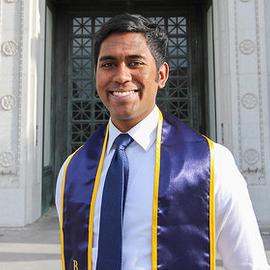
Aditya Nandy
Chemistry PhD

Ralf Meyer
Postdoctoral Associate

Freya Edholm
Course X UROP

Changhwan Oh
Graduate Student

Daniel B. K. Chu
ChemE PhD